

Covid-19 has changed all our lives. Over the last few months, we have had to change our plans, adapt our lifestyles and accept our losses. For some, it is has been harder than for others. It feels like we’re over the worst of it, though no-one can be sure and even if the worst is behind us, the road ahead is still bumpy and long. Normal life will look different.
As we think about ‘the new normal’ for church, much of the road ahead is unknown. We have to consider: caring for the most vulnerable, physical distancing, an online-live-streaming option, limiting our singing, changing the way we do communion, handling the differences of opinions and approaches to the government guidelines, etc. etc.
If we’re not careful we can easily let fear and discouragement dominate us. We can turn in on ourselves and away from God and others.
1 Corinthians 13:13
The Apostle Paul reminds us that the Christian life is basically about three things – faith, hope, and love. He is talking about how much of what we know in this life will pass away when ‘completeness’ comes (vs10). He is talking about the return of Jesus to this world, to end all evil, sadness, sorrow, and applying that to how we use spiritual gifts at the present time.
In other words, WHAT we do is not as important as WHY and HOW we do it. The motive and manner of the action is more important than the action. And so, whilst our spiritual gifts and many actions will cease, he says
‘And now these three remain: faith, hope and love. But the greatest of these is love.’
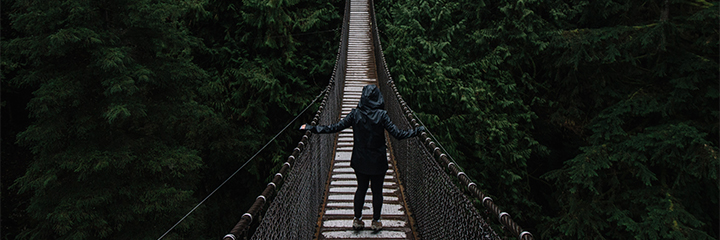
As we think about the road ahead which is not a well-worn path, let’s consider why and how we can act when it comes to our church community.

Faith, not fear
It’s easy to let fear creep in as we think about the future – fear of catching Covid-19, fear of losing your job, fear of financial challenges, fear of losing relationships, fear of not being competent enough to handle it all… Fear…fear…fear.
Do you know the prohibition God gives the most times in the Bible? It’s not about sex or drink or money or murder or lying…the most repeated prohibition in the Bible is ‘do not be afraid’.
It’s hard to get an exact number on it because there are various phrases used – do not be afraid, fear not, do not be discouraged etc., etc. It has been said there are 365 ‘do not be afraids’ in the Bible, one for each day. Whether that is exactly true or not is beside the point. The point is that our natural tendency is to fear, and so God is repeatedly telling us not to fear and giving us reasons why. It’s not that there are no scary things in the world that could harm us (like Covid-19) but rather that he is bigger and can protect us, and even the worst things in the world cannot ultimately separate us from his love (Romans 8:35-38).
Here are a few of those prohibitions and the reasons given:
- ‘Do not be afraid. Stand firm and you will see the deliverance the Lord will bring you today’. (Exodus 14:13)
- ‘Do not be afraid of them; the Lord your God himself will fight for you’. (Deuteronomy 3:22)
- ‘Do not be afraid of them; I have given them into your hand. Not one of them will be able to withstand you’. (Joshua 10:8)
- ‘Do not be afraid of those who kill the body but cannot kill the soul. Rather, be afraid of the One who can destroy both soul and body in hell’. (Matthew 10:28)
- ‘Do not be afraid, little flock, for your Father has been pleased to give you the kingdom’. (Luke 12:32)
Hope, not despondency
Once fear sets in, we can easily become discouraged and despondent. At its worst, we can despair. We look out into the unknown future and we feel so inadequate and out of control that we give up hope of anything good happening. We think about all the ‘what ifs’ and in each case – it’s bad news. We cannot imagine how we’re going to get through this, let alone help others.
Do you remember when Jesus met Mary and Martha after the death of their brother, Lazarus, in John 11? Martha still had some level of faith and hope, though it was all projected to the next life (John 11:24), and then Jesus gave her faith for change in this life – He is the resurrection and the life.
But Mary was in a much more depressed state than Martha. She did not initially go out to meet Jesus, as her sister did, and we are told she is weeping. Her hope has gone. But Jesus comes alongside her, not with a great pronouncement of truth, as He had for Martha (vs25), but with tears (vs33). Jesus too wept and then He restored their faith and hope as He raised their brother back from the dead.
We, too, need to know Jesus coming alongside us, weeping with us, but also helping us regain hope where the future seems bleak. With Jesus, the future always has possibilities ‘and we know that in all things God works for the good of those who love him, who have been called according to his purpose‘ (Romans 8:28).
So, we need to not despair, be discouraged, or become despondent. Jesus is with us, He is for us and He is leading us on. He is our shepherd who walks through the valley of the shadow of death with us and brings us to the green pastures on the other side.
One application of remaining hopeful is to remain engaged when it is tough or when it would be easier to withdraw. Keep working hard at friendships and online interactions. Keep going when it is hard to figure out how to handle all the Covid-19 restrictions and social gatherings. Don’t give up. Persevere, stay hopeful, stay engaged, be a servant.

Love, not selfishness
Sin turns us inward. Fear turns us inwards. Hopelessness turns us inwards. The natural tendency of the human heart is to look after ourselves and disregard other people. That is what selfishness looks like – turning in to focus on ourselves.
Love moves us out of ourselves – to others and to God. The greatest two commandments are to love God and to love others (Matthew 22:37-40). To love someone, you have to stop thinking about yourself and start thinking about them.
And love makes us vulnerable. In other words, we could get hurt. People make mistakes, so if we love them and entrust ourselves to others and love them, they may act selfishly and that may hurt us. C.S. Lewis put it like this:
‘To love at all is to be vulnerable. Love anything and your heart will be wrung and possibly broken. If you want to make sure of keeping it intact you must give it to no one, not even an animal. Wrap it carefully round with hobbies and little luxuries; avoid all entanglements. Lock it up safe in the casket or coffin of your selfishness. But in that casket, safe, dark, motionless, airless, it will change. It will not be broken; it will become unbreakable, impenetrable, irredeemable. To love is to be vulnerable.’
C.S. Lewis, The Four Loves
The choice, then, is between a hard heart that cannot know love nor hurt, and a soft heart that can know both.
As we go into an unknown future, with a bumpy road and people who will hurt us by their actions and choices, let’s continue to love. Let’s stay vulnerable and open. Let’s have soft hearts.
How is this possible? Only as you know the one who came to love you and give His life for you, to ensure you are safe and secure forever. As Paul said in Galatians 2:20:
‘I have been crucified with Christ and I no longer live, but Christ lives in me. The life I now live in the body, I live by faith in the Son of God, who loved me and gave himself for me.’
And let’s remember Paul’s words to the Corinthians: in the end, there are three things that matter in Christianity – Faith, hope, and love.
But the greatest of these is love.
Need Help?
If you would like to chat to someone about anything that this blog has raised please don’t hesitate to get in contact with one of the staff or leadership team. If you’re not sure how please email hello@christcitychurch.ie.