

I feel very convicted as I write this blog that I haven’t done this sooner. We aim to fast once a term, and the last time we did corporately was on Wednesday 5th February, before the coronavirus pandemic hit our world. If there was ever a reason for God’s people to commit together to seek God through prayer and fasting it is now.
Joel – a plague of locusts
It was reading the book of Joel this past week that stirred me in thinking that we as a church should set aside a day for prayer and fasting. Joel was written around 500 BC when the fledgling returning Israelite community faced a prolonged, unprecedented and devastating plague of locusts – multiple harvests were destroyed (Joel 1:4). So the book of Joel gives us some great parallels for the times we are living through – how should we interpret and respond to a prolonged, unprecedented and devastating pandemic?
Leslie Allen says*
It was Joel’s function to interpret the plague of locusts in religious terms and guide the community to take suitable religious measures to cope with the problem.
How to respond to a devastating plague?
So how did Joel interpret and urge the people to respond to the the plague of locusts?
(1) A call to wake up (Joel 1:5) – The people needed to wake up to their spiritual slumber and see their spiritual backsliding. This was a call to sobriety, to come out of their spiritual stupor and renew their zeal for the Lord.
(2) A call to mourning (Joel 1:8, 1:13) – The people should mourn for the loss of the harvest, the loss of life, the loss of confidence, the loss of land. But underneath those losses, the plague was a judgement from God, and so the people should mourn their sin and their rebellion.
(3) A call to inner repentance (Joel 1:12-13) – Joel calls the people to look at their hearts, and to seek God afresh. Their repentance had to be sincere and more than ‘skin deep’. This was not just a ‘religious show’ this was real! These are the most famous words of the book and so worth quoting in full:
12 ‘Even now,’ declares the Lord,
‘return to me with all your heart,
with fasting and weeping and mourning.’13 Rend** your heart
and not your garments.
Return to the Lord your God,
for he is gracious and compassionate,
slow to anger and abounding in love,
and he relents from sending calamity.
Repentance is beautifully described here as a ‘return home’ to God and to who we were made to be.
(4) A call to prayer (Joel 1:12-14) – God’s people were to seek God for forgiveness, deliverance and blessing. God was behind the plague, as judgement on the land of Israel, so only he could be the saviour. They were to pray to God on the basis of his character (2:13), his promises (2:17), his reputation/glory (2:17), the potential possibilities (2:14) and as an act of surrender (2:14).
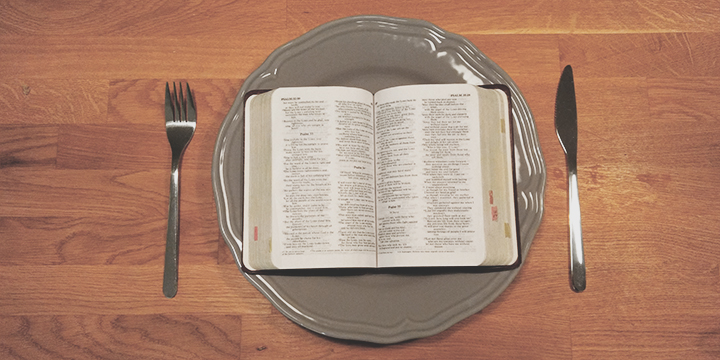
(5) A call to fasting (Joel 1:14, 2:12 and 2:15) – The people were to declare a holy fast and together seek God for forgiveness and deliverance (similar to 2 Chronicles 20 when Israel faced a terrifying army of enemies). Fasting was a way to do all of the things above:
- To wake up and seek God earnestly
- To mourn over the brokenness in the world and their lives
- To do deep internal examination and repentance
- To pray and seek God for forgiveness, deliverance and blessing.
We too can seek God on the basis of his character, his promises, his reputation/glory, the potential possibilities that might come out of this and as an act of surrender on our part.
Old & New Covenant – blessings and curses
All that said, we must be careful how we interpret the book of Joel when considering the pandemic that we are facing today. Joel was part of the Old Covenant where the land acted as a spiritual barometer of the people’s faithfulness to God. God had said (Leviticus 26 and Deuteronomy 28) that if the people were faithful to God he’d bless the land, and if they were unfaithful he’d curse it. So the plague of locusts is to be interpreted as part of the old covenant dynamic.***
We live under the new covenant, and for those who trust in Jesus, he has taken the curse we deserve (Galatians 3:13-14) so we might receive every spiritual blessing in him (Ephesians 1:4).
That said, Jesus responded to a natural disaster in his day with a similar message – “unless you repent, you too will perish” (Luke 13:1-4). Emphatically he said we should not be afraid of those that can kill the body but rather the one that can destroy the body and soul in hell (Matthew 10:28). In other words, when we are faced with potential physical death, we should see this as a chance to wake up, mourn, repent and seek God.
The Day of the Lord
Seven times in the book Joel mentioned ‘the day of the Lord’ (1:15, 2:1, 2:11, 2:28, 2:31, 3:14, 3:18). He is talking about God dramatically visiting his people, mostly in judgement. Initially this is how Joel interprets the plague of locusts – God visiting his people in judgement, and none can endure it. As the book of Joel unfolds, the horizons change from the current crisis of the locusts to a future day and era when God would come again, and there would be both devastating judgement (that none can endure) and wonderful blessing (that is hard to imagine…the mountains dripping with wine and the hills flowing with milk – Joel 3:18).
This future horizon that Joel had in mind, like climbing a mountain, had different peaks of fulfilment. Firstly they were applied to his day and the locusts (the initial small peak) but beyond that were fulfilled in the coming of Christ, the coming of the Spirit (Joel 2:28-32 is quoted by Peter at Pentecost) and the return of Christ at the end of time. So we now live in the last days before the coming of the great and dreadful day of the Lord, and God is giving the world a chance to hear the gospel and repent (Joel 2:31-32). (Also see Acts 2:14-41 and Romans 10:10-15 where Peter and Paul quote Joel 2.)
Our response?
So how should we respond? What can we discern that God is doing in our moment of history, as we live between the resurrection and the return of Christ? Our world is certainly receiving a shaking and therefore we are to be even more thankful that we are receiving an unshakeable kingdom (Hebrews 12:26-28).
But it is also appropriate for us to seek God in prayer and fasting and since we have our first Hybrid Prayer & Worship Night (so online and in person) this coming Wednesday (5th August), it makes sense for us to seek God together and use the day and our time together.
I believe God is calling us…
- To discern where and how he is ‘waking us up’
- To mourn the loss in our world
- To repent of our sin
- To do deep internal examination
- To seek God in prayer, for forgiveness, deliverance and blessing
- To seek him for wonderful possibilities of hope that might come from this
- To seek him for the salvation of many who might come to hear the gospel, repent and believe
So if you’re able, please do put time aside to fast this Wednesday coming. I have written more on WHY fast and HOW to fast, and some PRACTICAL GUIDELINES in this blog – https://www.christcitychurch.ie/why-fast/
*Leslie Allen in his introduction to Joel in the New Bible Commentary
**rend is an old fashioned word which means to tear or divide, as you would tear/divide clothes to show people you were in mourning. We are to do that in our hearts, to show God our mourning over our sin and backsliding.
***For an interesting reflection on whether God caused the Coronavirus read Phil’s Moore’s blog, based on the book of Job – https://thinktheology.co.uk/blog/article/did_god_cause_the_coronavirus